







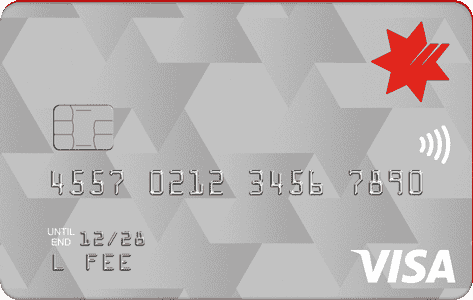


Points per $1 Everyday spend Up to 44 interest free days If you shop at Coles, this card is well worth a look, as you earn Flybuys points on eligible everyday spend (up to a cap), allowing you to earn up to 3 points for every $1 spent. The annual fee is very reasonable for this earn rate and you'll even get a bonus $250 Coles Gift Card when you sign up by 17 Mar 2026 and spend $3,000 on eligible purchases within 90 days from approval.  Pros - Earn points on spending (up to a cap)
- Low annual fee
- Option to pay in instalments
 Cons - High interest rate on purchases
- Expensive for cash advances
 Additional information |
Points per $1 Everyday spend The American Express® Platinum Card is iconic. The $1,450 annual card fee is not cheap but is arguably well worth it. There’s massive points-earning potential, both for everyday spend and welcome bonus points if you qualify. You can transfer your points to over 10 major partners across airline, hotel & retail, including Qantas Frequent Flyer and Virgin Australia Velocity Frequent Flyer. Card Members get a $450 Travel Credit each year to use on eligible bookings with the Platinum Travel Service or American Express Travel Online, plus up to $400 as a Global Dining Credit to spend at over 2,000 participating restaurants in 20 countries (enrolment required, T&Cs apply, benefit ends 31 December 2026). All that’s on top of the various other travel, shopping and entertainment perks, making this card a pretty compelling proposition overall.  Pros - Complimentary Travel Insurance (terms, conditions & exclusions apply, such as maximum age-limits, pre-existing medical conditions and cover limits)
- Access 1,550+ lounges at over 500 airports in 140 countries (T&Cs apply)
- Up to $400 Global Dining Credit (T&Cs apply)
- $450 Travel Credit each year (T&Cs apply)
 Cons - High annual fee
- High foreign exchange fees
 Additional information - Card Type: American Express
|
Points per $1 Everyday spend This Card is worth considering if you want frequent flyer perks and the option to use your points at multiple airlines – in fact, you can transfer your points to over 10 major partners across airline, hotel & retail. The annual fee is $395, but you get $400 back as a travel credit to spend on eligible domestic and international flights, hotels or car hire with American Express Travel. Complimentary domestic and international Travel Insurance (when you purchase a return trip on your Card), plus two complimentary entries per year to The Centurion® Lounge at Sydney International Airport or Melbourne International Airport add to the appeal. Be sure to read the benefit T&Cs carefully to make sure you can take advantage.  Pros - Get welcome bonus Points (eligibility criteria, T&Cs apply, New Amex Card Members only)
- Complimentary Travel Insurance when you purchase a return trip on your Card (terms, conditions & exclusions apply, such as maximum age-limits, pre-existing medical conditions and cover limits)
- Earn Membership Rewards® Points for eligible spend (T&Cs apply)
- $400 Annual Travel Credit (T&Cs apply)
 Cons - High foreign exchange fees
- High interest rate on purchases
 Additional information - Card Type: American Express
|
Points per $1 Everyday spend For Velocity Frequent Flyers, this card offers a compelling set of benefits and perks. The points-earning potential is significant, with a high base earn rate on standard card purchases (lower rate applies on government spend) and an accelerated rate on spending with Virgin Australia. Eligible Cardholders can also earn up to 100 Velocity Status Credits each year – 50 when you spend $25k on eligible purchases each Membership year and 50 more when you spend another $25k in the same Membership year (T&Cs apply). The Card also offers complimentary domestic lounge access every time you fly domestically with Virgin Australia (at selected domestic airports, enrolment required, T&Cs apply), with two single entry VA Guest Lounge Passes each Membership year to treat friends or family when travelling with you on a domestic Virgin Australia flight (selected domestic airports. T&Cs apply.) Just make sure you’re making the most of the perks to offset the $440 annual card fee.  Pros - Earn Velocity Points for eligible spend
- Get bonus points when you sign up
- Complimentary Travel Insurance (terms, conditions & exclusions apply, such as maximum age-limits, pre-existing medical conditions and cover limits)
- Complimentary domestic Virgin Australia Return Flight each anniversary year (Subject to availability, T&Cs apply)
- Complimentary domestic lounge access every time you fly domestically with Virgin Australia (At selected domestic airports. Enrolment required. T&Cs apply)
- Up to 100 Bonus Velocity Status Credits each year (T&Cs apply)
 Cons - High interest rate on purchases
- No pre-set card limit could cause overspending
 Additional information - Card Type: American Express
|
Points per $1 Everyday spend It’s called Ultimate because this is the top-tier Qantas Card from American Express. What do you get for the $450 annual fee? Well, there’s a $450 Annual Qantas Travel Credit for starters. You can use that on eligible domestic or international Qantas flights each year when booked through American Express Travel (T&Cs apply). You also get uncapped Qantas point earning potential, with the earn rate per $1 varying depending on how you spend. The Card offers a host of other travel perks, plus up to four additional cards for family members or friends, at no extra fee.  Pros - Complimentary Travel Insurance when you pay for your return trip on your Card (terms, conditions & exclusions apply, such as maximum age-limits, pre-existing medical conditions and cover limits)
- Get welcome bonus Points (eligibility criteria, T&Cs apply, New Amex Members only)
- $450 Annual Qantas Travel Credit (T&Cs apply)
- Earn Qantas points for eligible spending (T&Cs apply)
 Cons - High interest rate on purchases
- High annual fee
- High foreign exchange fees
 Additional information - Card Type: American Express
|
Points per $1 Everyday spend The American Express Velocity Escape Plus Credit Card combines the ability to earn Velocity Points with one of the lower ongoing card fees among cards in this category – $95 per year. You also get a $50 Virgin Australia Statement Credit when you save the benefit to your card and spend $50 or more on eligible flights with Virgin Australia (one credit per redemption period up to 31 December 2026, exclusions apply). The other major perk is Complimentary Travel Insurance when you use your Card to pay for your return trip. Terms, conditions and exclusions apply (such as maximum age limits, pre-existing medical conditions and cover limits).  Pros - Earn Velocity Points for eligible spend
- Get bonus Points when you sign up (eligibility criteria, T&Cs apply, New Amex Members only)
- Complimentary Travel Insurance (terms, conditions & exclusions apply, such as maximum age-limits, pre-existing medical conditions and cover limits)
- Up to 55 days interest free on purchases
 Cons - High interest rate on purchases
- High foreign exchange fees
 Additional information - Card Type: American Express
|
Points per $1 Everyday spend This is the only Amex card that charges a monthly instead of annual fee. Whatever way you slice the fee, it’s decent value. The points earning potential is significant, with accelerated earning on the first 10,000 points per month (a lower rate then kicks in) and spending with selected merchants. Just pay attention to which merchants qualify for the top points earn rates and whether you’re likely to take full advantage. Screen protection coverage is a nice extra too (up to $500 for two events a year, with a 10% excess applied to the claimed amount, waiting periods as well as other limits and exclusions may apply - check with American Express for full details).  Pros - Add up to 4 Additional Cards to your Account for family or friends, at no extra charge (eligibility criteria and T&Cs apply)
- Smartphone screen insurance (subject to limits, excess and waiting periods)
- Earn reward points for eligible spend
 Cons - Amex not accepted everywhere
- High interest rate on purchases
- High foreign exchange fees
 Additional information - Card Type: American Express
|
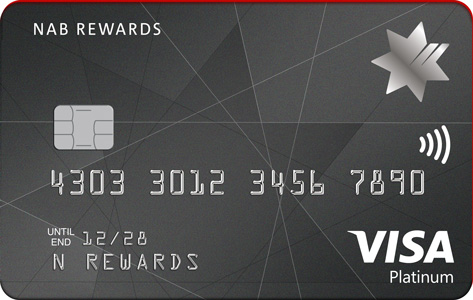
Points per $1 Everyday spend Up to 44 interest free days Plenty to like here: Up to 100,000 NAB points for signing up but split over two years (80K + 20K in year two) when you spend $3,000 on everyday purchases within the first 90 days of account opening and keep your card open for over 12 months. This means you will have to pay two annual fees of $195 to get the benefit. Nonetheless, if you do your sums and can make this card work, you'll benefit from a host of perks and plenty of versatility with rewards. There's a 0% balance transfer offer for 12 months (3% BT fee applies) and the card carries a minimum credit limit of $6k. Rewards-wise, you'll enjoy uncapped points potential and earn 1 point for every $1 spent on everyday purchases, 1.5 points on groceries and 2 points with Webjet.  Pros - Earn reward points for eligible spend
- Get bonus points when you sign up
- Long interest-free balance transfer
- Complimentary Travel Insurance
 Cons - High interest rate on purchases
- Balance transfer fee applies
- High revert rate after balance transfer offer
 Additional information |
Points per $1 Everyday spend Up to 44 interest free days This is one of the rare credit cards that combines no annual fee with the ability to earn rewards points. With the Coles No Annual Fee Mastercard you can earn up to 1 Flybuys point per $2 on eligible purchases, capped at $5,000 each statement period. In other words, a maximum of 2,500 points per statement period. No additional cardholder fee is another plus for this card. The interest rate on purchases and cash advances is relatively high and worth considering if you carry a balance on your card beyond the interest-free period.  Pros - Earn points on spending (up to a cap)
- Earn bonus sign-up points (minimum spend applies)
- No annual fee
- No fee for extra cards for family members or friends
 Cons - High interest rate on purchases
- Expensive for cash advances
 Additional information |
Points per $1 Everyday spend Up to 55 interest free days This fuss-free card is a great option for those seeking a simple card with a low ongoing rate. 13.49% p.a. on purchases is pretty low, but watch for cash advances as they will cost you 21.74% p.a. There’s a $59 annual fee and a $1k minimum limit, so fairly standard in the low-rate field. 55 days interest-free (25 days to pay) is about as good as it gets. New cardholders can avail of $400 cashback when you spend $5k on purchases within your first 150 days of account opening and there’s also a 0% p.a. balance transfer offer (3% BT fee) for 12 months which may prove useful for those looking to transfer from another card.  Pros - Low rate on purchases
- Low annual fee
- Earn cashback
- Long interest-free balance transfer
 Cons - Balance transfer fee applies
- High revert rate after balance transfer offer
- Expensive for cash advances
 Additional information |
Points per $1 Everyday spend Intro annual fee Then $59 p.a. Up to 55 interest free days 13.49% p.a. on purchases is pretty low, but watch for cash advances as they will cost you 21.74% p.a. There’s a $59 annual fee (waived in year one) and a $1,000 minimum limit, so fairly standard in the low-rate field. 55 days interest-free (25 days to pay your bill after it lands) is about as good as it gets. The 24-month balance transfer offer at 4.99% p.a. and no BT fee is a decent deal, but not quite up there with the market leading balance transfer cards. The alternative version of this card has a cashback offer and a 12-month 0% balance transfer deal (3% BT fee applies), so arguably a better deal overall.  Pros - Long, low-rate balance transfer offer
- No annual fee in the first year
- Low ongoing annual card fee
- Low rate on purchases
 Cons - High revert rate after balance transfer offer
- No rewards
 Additional information |
Points per $1 Everyday spend The Latitude Low Rate Mastercard combines a low interest rate on purchases and low-ish annual fee with a number of eye-catching perks and rewards. Cardholders can avail of 3% back in Latitude Rewards when they set up recurring payments direct with participating utilities, telco and streaming services (T&Cs apply), with the ability to spend rewards on shopping, dining and entertainment. You can add an extra cardholder at no extra cost when you apply to make the most of the card benefits.  Pros - Low rate on purchases
- Low annual fee
- 3% back each statement period in Latitude Rewards on recurring payments direct with participating utilities, telco and streaming services. (T&Cs apply).
- Complimentary E-commerce purchase protection
 Cons - $1.95 handling fee for BPAY® payments
- 3% foreign exchange fee applies (payable on the AUD value of the international transaction)
 Additional information |
Points per $1 Everyday spend Intro annual fee Then $96 p.a. Travellers will love this card. There’s no international transaction fees on it and a 10% off hotels deal with Expedia for cardholders. Plus, you'll have access to global roaming data from eligible telco networks in 150 countries; and a flight delay pass which offers access to airport lounges if your flight is delayed by 2 hours or more. Card holders also get complimentary E-Commerce and Purchase Protection Insurance for a bit of extra confidence when shopping at home, abroad or online. If all that isn't enough, card holders can earn up to $240 in rewards each year which adds a bit of extra cream to an extensive list of benefits. Just a heads up - the interest rate is on the higher side at 27.99% p.a. and there's a small fee of $1.95 if paying by BPAY. Nonetheless, when used the right way, this card can be a low-cost traveller's best friend.  Pros - Purchase protection insurance
- No annual fee in first year
- Zero foreign exchange fees
- 55 days interest free
 Cons - High interest rate on purchases
- Expensive for cash advances
 Additional information |
Points per $1 Everyday spend Up to 55 interest free days This card is almost identical to the Latitude Gem Visa, targeting shoppers looking for flexible payment plans with partnered retailers like Harvey Norman and Domayne. It offers a 6-month interest-free period on eligible purchases over $250 when activated via the Latitude app within 30 days. The monthly fee of $10.95 ($131.40/yr) represents good value for this card's features, but customers will do best to avoid interest charges (27.99% p.a. purchase rate, 29.99% p.a. on cash advances, expired balance transfers and lapsed interest-free plans). Nonetheless, there's good value on offer when this card is used appropriately, particularly with the added sign-up incentive currently offering $300 credit back when you spend $1,500 per month for your first four months when approved by 17 Feb 2026.  Pros - Enjoy 6 months Interest Free on general purchases of $250 or more when activated within 30 days in the Latitude app.
- Low minimum credit limit
- Interest-free payment options
 Cons - High interest rate on purchases
- Late payment fee applies
- Expensive for cash advances
 Additional information |
Points per $1 Everyday spend Up to 44 interest free days If you shop at Coles, this card is well worth a look, as you earn Flybuys points on eligible everyday spend (up to a cap), allowing you to earn up to 3 points for every $1 spent. The annual fee is very reasonable for this earn rate and you'll even get a bonus $250 Coles Gift Card when you sign up by 17 Mar 2026 and spend $3,000 on eligible purchases within 90 days from approval.  Pros - Earn points on spending (up to a cap)
- Low annual fee
- Option to pay in instalments
 Cons - High interest rate on purchases
- Expensive for cash advances
 Additional information |
Points per $1 Everyday spend Up to 44 interest free days This card competes head on with the ANZ Black Rewards Card. $270 per year with the highest points earn rate (uncapped too) of a Bankwest card, but what exactly you can get for your points is not entirely clear. This level of annual fee is getting up there and remember you will need to get at least that $270 back in gift cards to make it worthwhile. Insurance is included which sweetens a not overly inspiring deal.  Pros - High rewards point earn rate
- Zero foreign exchange fees
- Complimentary Travel Insurance
- Lounge access
 Cons - High annual fee
- High interest rate on purchases
- Expensive for cash advances
- High minimum credit limit
 Additional information |
Points per $1 Everyday spend The American Express® Platinum Card is iconic. The $1,450 annual card fee is not cheap but is arguably well worth it. There’s massive points-earning potential, both for everyday spend and welcome bonus points if you qualify. You can transfer your points to over 10 major partners across airline, hotel & retail, including Qantas Frequent Flyer and Virgin Australia Velocity Frequent Flyer. Card Members get a $450 Travel Credit each year to use on eligible bookings with the Platinum Travel Service or American Express Travel Online, plus up to $400 as a Global Dining Credit to spend at over 2,000 participating restaurants in 20 countries (enrolment required, T&Cs apply, benefit ends 31 December 2026). All that’s on top of the various other travel, shopping and entertainment perks, making this card a pretty compelling proposition overall.  Pros - Complimentary Travel Insurance (terms, conditions & exclusions apply, such as maximum age-limits, pre-existing medical conditions and cover limits)
- Access 1,550+ lounges at over 500 airports in 140 countries (T&Cs apply)
- Up to $400 Global Dining Credit (T&Cs apply)
- $450 Travel Credit each year (T&Cs apply)
 Cons - High annual fee
- High foreign exchange fees
 Additional information - Card Type: American Express
|
Points per $1 Everyday spend Intro annual fee Then $149 p.a. Up to 44 interest free days Please note: This credit card is currently unavailable to new customers. Step up to Platinum and double your points earn versus the base-level rewards card from BOQ. You will need a higher limit (from $6k), with a higher annual fee too ($75 in year one then $149). You’ll also get 100,000 points as a sign on bonus, subject to eligibility criteria. They throw a lot at a platinum card and it’s probably worth it given the modest enough annual fee. BOQ don't reveal too much about what your points are worth before you sign up (which is not unusual in fairness) so keep an eye on that. Transfers to Flybuys are an option if that's your jam.  Pros - High rewards point earn rate
- Get bonus points when you sign up
- Complimentary Travel Insurance
- Long interest-free balance transfer
 Cons - High revert rate after balance transfer offer
- Balance transfer fee applies
- High interest rate on purchases
 Additional information |
Points per $1 Everyday spend Up to 44 interest free days All Bankwest Platinum cards waive the foreign exchange fee of 2.95% which if you travel, can save you a few hundred bucks a year. The $160 annual fee gets you travel insurance too, so if you want a step up from the Classic rewards card, this may be a better option. There’s also a higher points earn rate but it’s not terribly clear what you can get for your points based on what Bankwest says on its website. Getting extended warranty insurance at this price point is good value.  Pros - High rewards point earn rate
- Zero foreign exchange fees
- Complimentary Travel Insurance
 Cons - High interest rate on purchases
- Rewards points are capped
- Expensive for cash advances
 Additional information |
Points per $1 Everyday spend Intro annual fee Then $295 p.a. Up to 55 interest free days A step up from the Platinum version of the card, but with a $295 annual fee ($199 in year one). There’s 150,000 sign on bonus on offer if you spend the required amount. Those points are worth around $675, so in year one your benefit is $476. Not bad BUT if you keep it for a year and spend the average of about $30,000 and don't revolve a balance, or use it overseas, you'll earn 45,000 points, which is worth about $200 and pay $295 for the privilege. Complimentary travel insurance and lounge passes could help make up the difference.  Pros - High rewards point earn rate
- Get bonus points when you sign up
- Long interest-free balance transfer
- Complimentary Travel Insurance
- Lounge access
 Cons - Balance transfer fee applies
- High interest rate on purchases
- High revert rate after balance transfer offer
- High annual fee
- High minimum credit limit
 Additional information |
Points per $1 Everyday spend Intro annual fee Then $295 p.a. Up to 55 interest free days You can earn up to 160,000 bonus Amplify Points for signing up (worth about $700 in gift cards), though the bonus is split over two years. The annual fee is $199 in the first year and $295 in the second, so once you factor that in, the bonus points work out to around a $200 net gain across two years. You’ll earn 2 points per dollar on eligible everyday purchases, which is a solid rate, although it drops to 0.5 points per dollar once you spend over $10,000 in a statement cycle. There’s no overall cap on points, which helps balance that out. The card also includes the usual suite of complimentary insurances and two lounge passes each year. Overall, it’s a well-rounded offer, though the $15,000 minimum credit limit hints it’s aimed at higher-income cardholders.  Pros - High rewards point earn rate
- Get bonus points when you sign up
- Complimentary Travel Insurance
- Lounge access
 Cons - High interest rate on purchases
- High annual fee
- High minimum credit limit
 Additional information |
Points per $1 Everyday spend Intro annual fee Then $295 p.a. Up to 55 interest free days You get up to 160,000 Amplify points as a bonus for signing up (worth around $700 in gift cards), but the points are spread across two years. You'll pay an annual fee of $199 in the first year, and $295 in year two, making the bonus points roughly a $200 net benefit over two years. The ongoing points earn rate is 2 per dollar spent on eligible everyday purchases, which is not bad. The earn rate drops to 0.5 points per dollar beyond $10,000 spent each statement cycle, but overall points are uncapped, which is another plus. You get all the insurances you expect with a rewards card, plus two lounge passes per year. Overall it’s a decent package. The minimum credit limit of $15k is pretty high and gives you an idea of the target market.  Pros - High rewards point earn rate
- Get bonus points when you sign up
- Complimentary Travel Insurance
- Lounge access
 Cons - High interest rate on purchases
- High annual fee
- High minimum credit limit
 Additional information |
Points per $1 Everyday spend Intro annual fee Then $295 p.a. Up to 45 interest free days If you don't like Qantas and prefer Virgin, Singapore Airlines or converting points for toasters, this card offers all of those things and more with Altitude Rewards. At least the is $0 annual rewards program fee. The top points earn rate is decent but drops off after you spend $10k in a month. Normally this card is $295 a year, but it’s only $200 in the first year as part of a special sign up offer which also includes a bagful of bonus points. Some of those bonus points are deferred until year two with the cards at which point you'll be paying full whack for the annual fee so keep that in mind. If you're already a Westpac customer, the annual fee is lower again in the first year at $99.  Pros - High rewards point earn rate
- Get bonus points when you sign up
- Complimentary Travel Insurance
- Lounge access
- Fraud protection
 Cons - High annual fee
- High foreign exchange fees
- Expensive for cash advances
- High minimum credit limit
 Additional information |
Points per $1 Everyday spend Up to 44 interest free days This card comes with a decent mix of rewards and travel perks, but you’ll really need to use them to get your money’s worth. That’s because the costs aren’t small: a 22.49% p.a. purchase rate, a $300 annual fee, and 22.99% p.a. on cash advances. On the perks side, you get two Priority Pass lounge visits each year, 2 points per $1 spent overseas or online on eligible purchases, and 1 point per $1 on everyday domestic spending. There’s also complimentary travel insurance, mobile phone insurance and purchase protection – nice extras if you’ll actually need them. The minimum credit limit is $10k, and international transactions attract a 3.5% fee. If you’re a bigger spender who’ll take full advantage of the rewards and travel benefits, this card could be worth a look. If not, there are definitely cheaper options out there.  Pros - High rewards point earn rate
- Complimentary Travel Insurance
- Lounge access
 Cons - High annual fee
- High interest rate on purchases
- Expensive for cash advances
 Additional information |
Points per $1 Everyday spend Up to 44 interest free days If your priority is points, this is worth a look. You get bonus points at sign up (if you meet the spend requirement), plus points per $1 spent. You can send these points to other airlines, hotel chains or get gift cards. Simple. It’s a ‘Black’ card, so it’s not cheap, but you get $100 back in the first year (again subject to minimum spend) to take the sting out of the $375 annual fee. There’s a minimum $15k limit which won't be ideal for everyone, and a high 20.99% p.a. rate on purchases if you carry a balance beyond the interest-free period.  Pros - High rewards point earn rate
- Get bonus points when you sign up
- Complimentary Travel Insurance
 Cons - High annual fee
- Fee applies for additional cards
- High minimum credit limit
 Additional information |
Points per $1 Everyday spend This Card is worth considering if you want frequent flyer perks and the option to use your points at multiple airlines – in fact, you can transfer your points to over 10 major partners across airline, hotel & retail. The annual fee is $395, but you get $400 back as a travel credit to spend on eligible domestic and international flights, hotels or car hire with American Express Travel. Complimentary domestic and international Travel Insurance (when you purchase a return trip on your Card), plus two complimentary entries per year to The Centurion® Lounge at Sydney International Airport or Melbourne International Airport add to the appeal. Be sure to read the benefit T&Cs carefully to make sure you can take advantage.  Pros - Get welcome bonus Points (eligibility criteria, T&Cs apply, New Amex Card Members only)
- Complimentary Travel Insurance when you purchase a return trip on your Card (terms, conditions & exclusions apply, such as maximum age-limits, pre-existing medical conditions and cover limits)
- Earn Membership Rewards® Points for eligible spend (T&Cs apply)
- $400 Annual Travel Credit (T&Cs apply)
 Cons - High foreign exchange fees
- High interest rate on purchases
 Additional information - Card Type: American Express
|
Points per $1 Everyday spend Up to 44 interest free days Prestige by name and prestige by price (the $700 annual fee definitely stings) but there’s a fair bit on offer here. You’ll earn 3 Rewards Points on eligible overseas spending and with major airlines, hotel chains and restaurants in Australia. Everyday categories like major supermarkets, petrol stations and national retailers earn 2 Points, and everything else picks up 1 Point. The purchase rate sits at 22.49% p.a., so if you tend to carry a balance, that’s something to consider. On the perks side, you get 15 Priority Pass lounge visits each year, $100 in Uber Premium credit, complimentary travel insurance and a travel booking credit – all handy if you’ll actually use them. Cash advances are steep at 22.99% p.a., the minimum credit limit is $20k, and international transactions attract a 3.5% fee. Is it worth the hefty annual fee? That really comes down to how much value you’ll squeeze out of the perks.  Pros - Lounge access
- Complimentary Travel Insurance
- Earn reward points for eligible spend
 Cons - High annual fee
- High interest rate on purchases
- High minimum credit limit
 Additional information |
Points per $1 Everyday spend Up to 55 interest free days Bendigo Bank’s version of a rewards card. Spend $12k and get a $50 gift card, based on what the provider says. But the card will cost you $89 a year. The included travel insurance is better value than the points and redeems the card overall. Up to 55 days interest-free (25 days to pay) is good, but an interest rate of nearly 20% p.a. will wipe out your $50 gift card if you don't pay your bill on time. If that’s a possibility, a lower-rate alternative may be worth considering.  Pros - High rewards point earn rate
- Complimentary Travel Insurance
- Purchase protection insurance
- No fee for extra cards for family members or friends
 Cons - High interest rate on purchases
- Expensive for cash advances
 Additional information |
Points per $1 Everyday spend Up to 44 interest free days Bankwest's entry-level rewards card comes with a 19.99% p.a. interest rate on purchases and a $100 a year fee. Some lower-spending cardholders will be lucky to recoup the fee with rewards. Balance transfers at 0.00% p.a. for six months is an okay offer but not market leading, as is the maximum 44 interest-free days (14 days to pay). Nothing too much wrong with this card but nothing ground-breaking either.  Pros - Earn reward points for eligible spend
- Low minimum credit limit
- 44 days interest free
 Cons - High interest rate on purchases
- Rewards points are capped
- No insurance offered with card
 Additional information |
Points per $1 Everyday spend Up to 44 interest free days A step down from the Black cards in terms of perks and cost. There’s a low-ish $6k minimum limit so it’s also more accessible for lower spenders. You still get bonus points and a $50 credit up front (subject to minimum spend) There’s a decent insurance offering too. The interest rate is on the high side, as you would expect for a rewards card, but otherwise this is a solid option.  Pros - High rewards point earn rate
- Get bonus points when you sign up
- Complimentary Travel Insurance
- Earn cashback
 Cons - High interest rate on purchases
- Fee applies for additional cards
- Expensive for cash advances
 Additional information |
Points per $1 Everyday spend Intro annual fee Then $199 p.a. Up to 55 interest free days This platinum card offers rewards, travel insurance and 0.00% p.a. balance transfer for 12 months albeit with a 2% fee. No card fee in the first year and then $149 thereafter which is about in the middle of the road for this kind of card. Travel insurance and two lounge passes may get you over the line for this card. A rewards program helps, but details about it are limited until you sign up so don’t rely on that being the icing on the cake when you apply.  Pros - Long interest-free balance transfer
- Complimentary Travel Insurance
- High rewards point earn rate
- No annual fee in first year
 Cons - High revert rate after balance transfer offer
- Expensive for cash advances
- Balance transfer fee applies
 Additional information |
Points per $1 Everyday spend Up to 44 interest free days There’s no monthly fee if you spend at least $2K a month, which most Aussies manage to do. You can earn Qantas Frequent flyer points or CBA points (which can be redeemed for gift cards). Points earn is okay but it’s not a market leader. No foreign exchange fee makes up for that. Travel insurance, lounge access (for a fee) and up to 44 days interest-free makes this a premium card worth considering. Cardholders will get most back in rewards if they use the card a lot AND pay the bill in full every month. The revolving interest rate is high at 20.99% p.a.  Pros - High rewards point earn rate
- Get bonus points when you sign up
- Zero foreign exchange fees
- No fee for extra cards for family members or friends
 Cons - High monthly fee unless minimum spend is met
- High interest rate on purchases
- Expensive for cash advances
 Additional information |
Points per $1 Everyday spend Up to 44 interest free days The NAB points sign-on bonus, paired with uncapped ongoing points-earning potential, will get you quite a few toasters or whatever floats your boat from the points store, or you can transfer points to one of a bunch of airlines (excluding Qantas). Unusually, this card has a bonus points AND a balance transfer offer. Just don't try to combine the two, as trying to meet the minimum spend for the bonus points could make clearing you balance transfer difficult. There's a $35 monthly fee unless you hit the $5k minimum spend, 20.99% p.a. interest on purchases and 44 day interest-free. That's all fairly standard for these NAB cards, but fee-free international transactions is a nice additional perk that will save you money if you spend overseas.  Pros - Earn reward points for eligible spend
- Get bonus points when you sign up
- Long interest-free balance transfer
- Complimentary Travel Insurance
 Cons - Monthly fee is high unless you spend enough to qualify for the waiver
- High interest rate on purchases
- Balance transfer fee applies
- High revert rate after balance transfer offer
 Additional information |
Points per $1 Everyday spend Intro annual fee Then $175 p.a. Up to 55 interest free days This comes in cheaper than the same card with the Qantas points option card because, well, Qantas. You will get 100,000 points up-front if you meet the spent requirement, which is worth around $450 in gift cards.This means in year two, the average punter who spends $30,000 a year on their credit card gets gift cards worth about $150 which you paid $124 in annual fees to get, so a net benefit of $26. If you use the card overseas, the extra fees will make the cost to benefit calculation less appealing.  Pros - Earn reward points for eligible spend
- Get bonus points when you sign up
- Complimentary Travel Insurance
 Cons - High interest rate on purchases
 Additional information |