



:quality(80))
:quality(80))
:quality(80))
:quality(80))
:quality(80))
:quality(80))
:quality(80))
:quality(80))
:quality(80))
:quality(80))
Best Amex business cards - detailed comparison
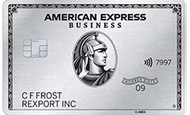
Get our expert view of where each Amex business card really excels to help you decide which, if any, is going to be right for your business.Best for premium rewards/travel: American Express Platinum Business Card
:quality(80))
Points per $1
Up to 2.25
Everyday spend
Sign up bonus
375,000
Membership Rewards
Card fee
$1,750
Per annum
Cash flow days
Up to 55
Money's take
This is arguably the most perk-packed business card in Australia, with a host of travel and frequent flyer benefits included for eligible Card Members. New Amex Card members can also earn 375,000 Bonu...

Pros
- 350,000 Bonus Membership Rewards Points + an $875 Credit (T&Cs apply)
- Access 1,550+ lounges at over 500 airports in 140 countries (T&Cs apply)
- No fee for up to 99 employee cards (T&Cs apply)

Cons
- High annual fee
- High foreign exchange fees
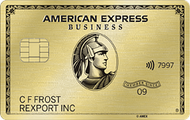
Best for value rewards: American Express® Business Gold Plus Card
:quality(80))
Points per $1
Up to 1.5
Everyday spend
Sign up bonus
250,000
Membership Rewards
Card fee
$395
Per annum
Cash flow days
Up to 55
Money's take
The American Express® Business Gold Plus Card comes with a package of perks and benefits very much tailored to small business owners. To start, 250,000 Bonus Membership Rewards Points when you spend $...
Pros
- 200,000 Bonus Membership Rewards Points
- Extend your cash flow by up to 55 days
- Earn reward points for eligible spend
- Complimentary Travel Insurance (terms, conditions & exclusions apply, such as maximum age-limits, pre-existing medical conditions and cover limits)
- Metal card for Primary Card Member
Cons
- High foreign exchange fees
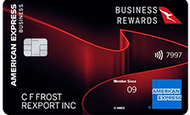
Best for Qantas points: American Express Qantas Business Rewards Card
:quality(80))
Points per $1
Up to 1.25
Everyday spend
Sign up bonus
150,000
Qantas Points
Card fee
$450
Per annum
Cash flow days
Up to 51
Money's take
The points-earning potential with this card is huge, especially on eligible spending with Qantas (2 points per dollar), plus there’s often a bonus points sweetener for signing up (offers vary and are ...
Pros
- Complimentary Travel Insurance (terms, conditions & exclusions apply, such as maximum age-limits, pre-existing medical conditions and cover limits)
- Two domestic Qantas Club Complimentary Lounge Invitations each year (T&Cs apply)
- Eligible new customers get bonus points for signing up
- Earn Qantas points for spending
Cons
- High annual fee
- High foreign exchange fees
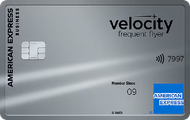
Best for Velocity Points: American Express Velocity Business Card
:quality(80))
Points per $1
Up to 1
Everyday spend
Sign up bonus
200,000
Velocity Points
Card fee
$249
Per annum
Cash flow days
Up to 51
Money's take
If your business flies Virgin, this card from Amex could be for you. You'll earn 200,000 bonus Velocity Points when you apply by 27 October 2026, are approved and spend $6,000 on eligible purchases on...
Pros
- Earn Velocity points for eligible spending
- Complimentary lounge passes
- Complimentary Travel Insurance (terms, conditions & exclusions apply, such as maximum age-limits, pre-existing medical conditions and cover limits)
Cons
- Fee applies for additional cards
Amex’s business-specific card perks

AccessLine®
This tool allows you to make secure domestic business payments to virtually any supplier even if they don’t accept card payments. This means you can potentially earn rewards points on more of your spending, including by earning points at the full earn rate for government-related expenses and paying the Australian Taxation Office.

Flexible spending power
Amex charge cards have a dynamic limit which means the amount of funds that you can access could change based on factors like transaction patterns and the business’s credit rating. Amex says you may be able to grow your spending power by using the card regularly and avoiding missed payments.

Flexible payment option
Cardholders can free up cash flow by choosing how much of their balance to pay off over time (up to your Flexible payment option limit) and for how long. The unpaid amount will be carried over to the next month’s balance but interest charges will apply.

Manage employee expenditure
Amex business cardholders can easily view business expenses on up to 99 employee cards linked to the same credit account. Lost or stolen cards can also usually be replaced within 48 hours.

Fraud protection
Cards are protected by Amex’s global fraud detection and unauthorised transaction liability coverage which helps to lessen unauthorised transactions.

Automate financial reporting
Instantly consolidate the business’s financial reporting with automatic transaction feeds from the card’s accounts into programs like Intuit Quickbooks, MYOB and Xero.

Cashback offers
Sign up for business supplier services, like Xero, Google ads, Meta and Amazon Web Services through the Amex portal and get a small portion of the price returned as cashback.

Membership Rewards
Amex rewards points have an unlimited earning potential, with no expiry on when they must be used and can be redeemed for almost anything. Amex business cards can also earn points from government spending (at a reduced rate), which is not the case for most business cards.

Travel benefits
Each card offers free or discounted lounge passes and complimentary travel insurance (subject to T&Cs of course). Rewards points can also be used to book flights and accommodation.

The Australian Taxation Office (ATO) has already announce that it will no longer accept direct credit card payments (including Amex) from 1 July 2027.
What can Amex business points be redeemed for?
The Amex Membership Rewards program can potentially be a valuable tool for small business owners wanting to make the most out of their everyday spending.
Just like most rewards credit card programs, Membership Rewards can be used to acquire gift cards from a range of retailers, restaurants, live entertainment and more. Some of the leading Aussie brands that cardholders can access gift cards for include Coles, Bunnings, Myer, Westfield, and Harvey Norman. These could be useful in covering routine business expenses like office supplies, equipment, as well as gifts and experiences for clients or team members.
Rewards can also be used for travel benefits through the American Express travel booking portal or by transferring points to a partner airline like Qantas or Velocity. For a small business, this could drastically reduce the cost of work related travel expenses.
For added flexibility, business owners could choose to use their points to offset eligible charges made on their Amex account or put it towards gaining more credit. Which would make it easier to access cash flow the next time you need to make a big purchase.
How Amex business cards compare
We’ve done the calculations to see how the Amex business cards compare to the rest of the market.
| Amex business cards | Other business rewards cards | |
|---|---|---|
Average annualised card fee | $711 | $210 |
Average rewards points per $1 (everyday spend) | 1.5 | 0.97 |
Average rewards points sign-up offer | 217,500 (worth around $1,087) | 68,541 (worth around $230 - $340) |
Average additional employee cardholders available | 75 | 16 |
Complimentary travel insurance | 100% of cards | 39% of cards |
Are Amex business credit cards worth it?
Deciding whether an Amex credit card is the best option for your business ultimately depends on if your priority is maximising perks or saving on costs.
Amex is well known for offering premium benefits on its business rewards cards, including a high point-earning rate and useful inclusions. Its business-specific tools enable business owners to monitor card expenses and access flexible finance options.
The level of business perks varies from card to card, so it’s a good idea to look closely at the features and decide which is the most appropriate for your business needs. While some of the travel perks are quite generous, they may be less worthwhile for business owners who don’t travel frequently, for example.
Amex cards tend to be a bit more restrictive on where they can be used, with some merchants unwilling to pay the associated merchant fees. That said, the AccessLine® feature ensures that most domestic payments can be made to other businesses and suppliers, even if they don’t accept card payments.
Amex card fees are generally quite high compared to other business credit cards. Unless you're really going to maximise the rewards, looking at cards with no annual fee or low purchase rates may be a smarter bet.
Business owners give their verdict on using an Amex card
Matt Alderton, Bx Networking
Money.com.au asked real business owners about their experience using an Amex card. Here’s what they had to say:
“As a business owner, I’ve found an Amex business credit card valuable because it helps consolidate spending, manage cash flow, and create better visibility across team expenses. In a business like Bx, where we have travel, events, suppliers, marketing costs and operational expenses, having the team using Amex helps streamline purchasing and makes expense tracking easier.
The rewards points are also a major benefit - we typically use them for flights, travel upgrades, accommodation and other business-related perks. While the fees can be slightly higher, for us the operational efficiency, cash flow flexibility and most importantly the rewards value make it worthwhile when managed properly. This was written 35,000 feet in the air, while travelling in row 1...paid for with QANTAS points from my Amex :)”
Matt Alderton, Bx Networking
Charles Liu, Cubic Promote
“We’ve used an American Express business credit card for more than five years as part of our operational and supplier payment workflows. For us, the biggest benefit has been centralised expense management and rewards. Because we operate in wholesale and manage ongoing supplier payments, consolidating spend through one system makes tracking and reconciliation much easier.
One thing I think business owners misunderstand is that a business credit card is not “free money” or purely a lifestyle perk. It’s an operational tool. If used strategically and disciplined properly, it can improve cash flow management and create efficiencies. If managed poorly, it can create the opposite effect very quickly.
From my perspective, the real value comes from structure, visibility over spending, and operational flexibility rather than simply chasing rewards.”
Charles Liu, Cubic Promote
Kayla Caruso, Music Lessons Academy
“We've been using AMEX for Music Lessons Academy for over 8 years. We currently have 1.4 million reward points accrued, earned entirely through regular business expenses like marketing spend, software subscriptions, contractor payments, and operational costs.
The rewards program has been genuinely valuable. We treat the card like a debit card (paying it off immediately to avoid interest) while earning points on expenses we'd be making anyway. Those points convert to business class flights or other travel benefits we'd never pay cash for.
The acceptance rate in Australia has improved significantly. Most suppliers and platforms we use accept it now. The rewards earn rate justifies using it as the primary business payment method. For small businesses with consistent monthly expenses, the points accumulate faster than you'd expect.”
Kayla Caruso, Music Lessons Academy
The verdict: Pros and cons of an Amex business card
Pros
- High earn rate for rewards points and many options for redemption
- Access to quality business specific tools that can be used to monitor expenses and improve operational efficiency
- Complimentary travel perks like insurance, lounge passes, and option to use points for flights or accommodation

Cons
- Fees are generally higher than other Australian business credit cards
- Some vendors and suppliers charge more to customers who use Amex
- Amex is not accepted everywhere

How to apply for an Amex business credit card

1. Determine your business’s eligibility
Before starting the application you will need to decide on the most appropriate category for your business from sole trader, company, trust, partnership or associations. The application and eligibility requirements will differ depending on the option you choose.

2. Fill out an application
Amex estimates that the application could take between five to twenty minutes to complete. It will ask for both personal details and information about the business with proof of your business type attached.

3. Additional information and documentation
Most applications for sole trader businesses will receive an instant decision, but for other business types it may need more information. If this is the case, the Amex team will contact you.

4. Receive your card
If you’ve been approved then your new Amex business credit card will be delivered by post. It will need to be activated online before the card can be used. This process will also prompt you to set up an online account where you can view the card’s balance, make repayments and more.